
Jul 2, 2026·Automation
Why Most Enterprise AI Agents Never Reach Production (And How to Fix It)
 Dhanshri H
Think about how many websites you visit in a day—checking the weather, scrolling through social media, shopping online, or reading the latest news. Behind every one of these experiences is web development.
Web development is the process of creating, building, and maintaining websites and web applications. It combines design, programming, databases, and modern technologies to deliver websites that are fast, secure, responsive, and easy to use.
Whether it's a personal portfolio, a business website, or a large e-commerce platform, web development transforms ideas into engaging digital experiences. In this guide, you'll learn what web development is, why it matters, the different types of web development, the technologies behind it, and how modern websites are built.
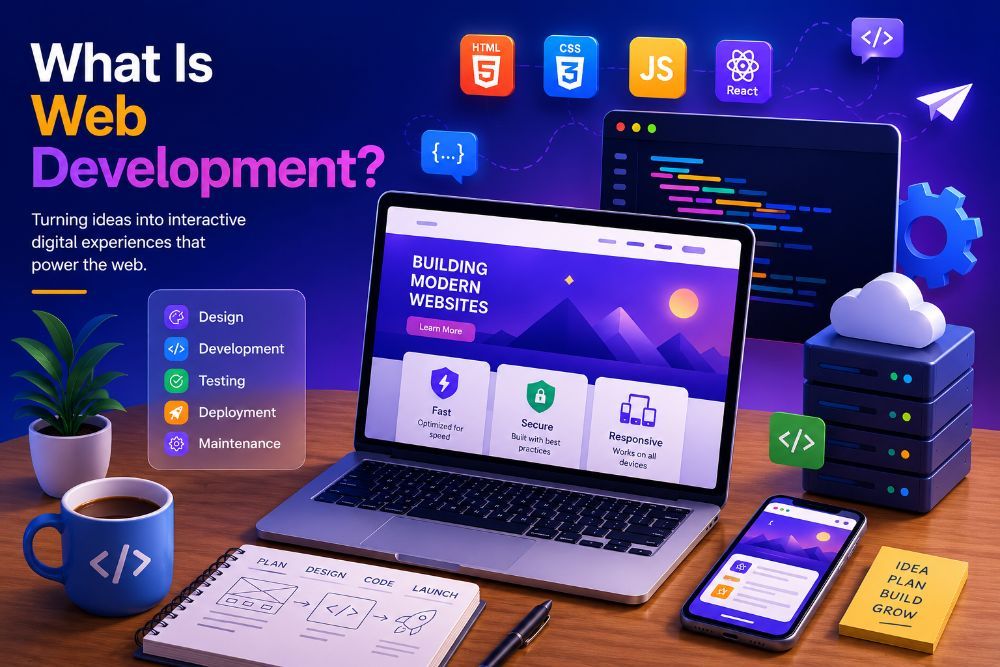
Web development brings together design, code, and technology to create fast, responsive, and engaging digital experiences.
1. Frontend Development
The part users see and interact with, including layouts, buttons, forms, and animations.
Popular technologies: - HTML - CSS - JavaScript - React
2. Backend Development
The behind-the-scenes logic that handles databases, authentication, APIs, and server operations.
Popular technologies: - Node.js - Express - Python - PHP
3. Full Stack Development
A full stack developer works on both the frontend and backend, building complete web applications.
A website is often the first impression of a business. A professionally developed website helps you:
A well-built website doesn't just look good—it works smoothly on every device and delivers value to your visitors.
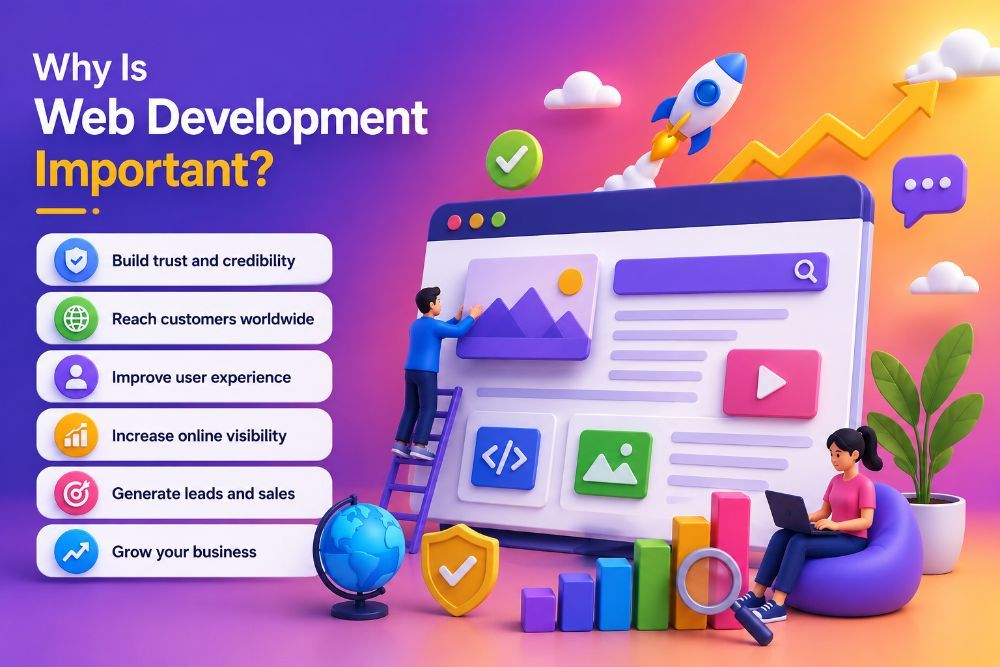
A professionally developed website helps businesses build credibility, improve user experience, and grow their online presence.
Modern websites rely on a combination of technologies, each serving a specific purpose.
Most websites follow these simple steps:
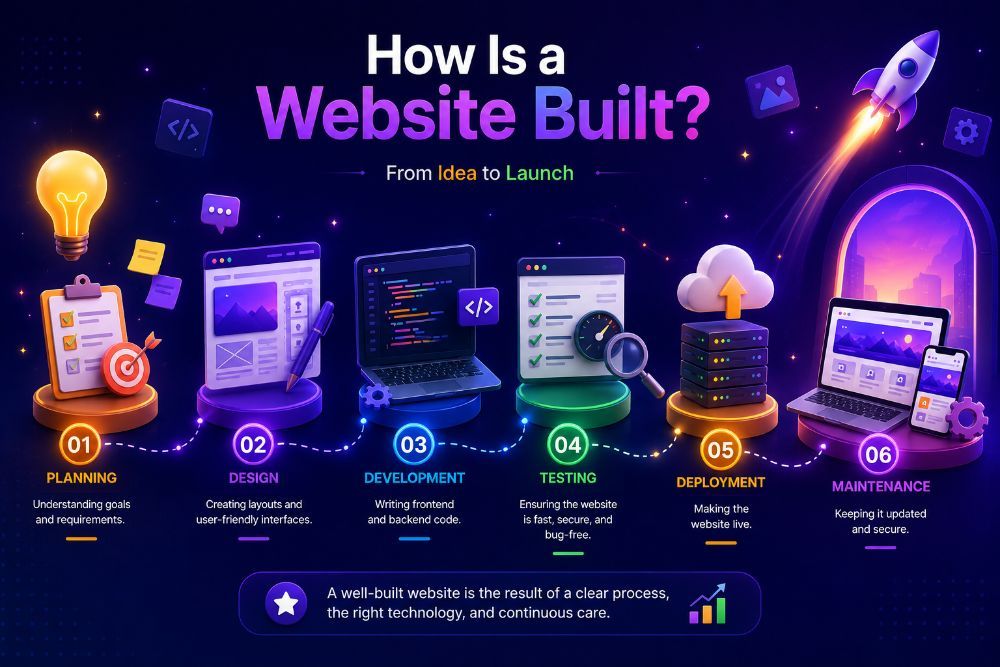
Every successful website follows a structured journey—from planning and design to development, testing, deployment, and continuous maintenance.
Web development is the foundation of today's digital world. It brings together creativity and technology to build websites that inform, engage, and solve real-world problems.
Whether you're launching a personal website or growing your business online, investing in quality web development ensures your website is fast, secure, responsive, and ready for the future.